
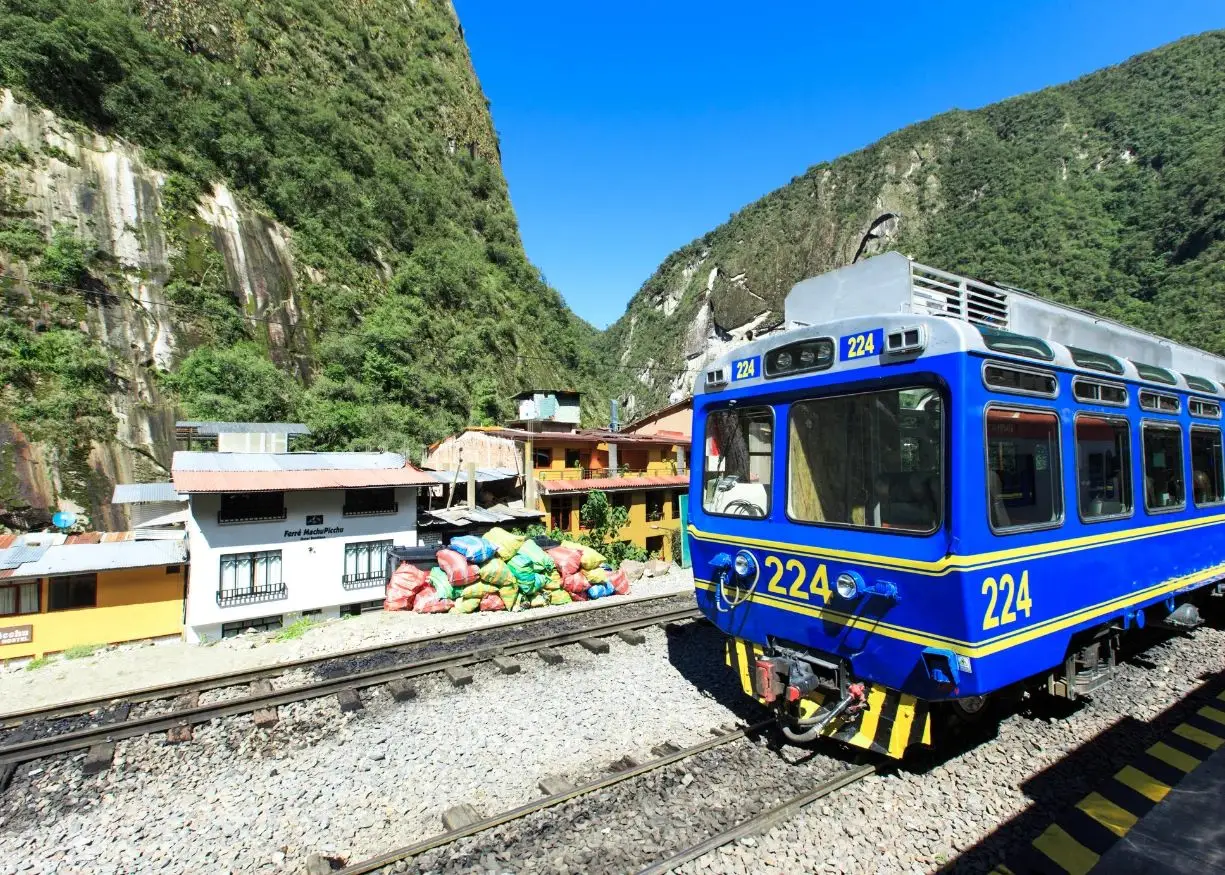
Short answer: most trains to Machu Picchu leave from Ollantaytambo station in the Sacred Valley, about 2 hours from Cusco. Depending on the season and operator, some also depart from Poroy, 20–40 minutes from the city, and very few from San Pedro. Wanchaq station is for trains to Puno. Check your ticket for the exact station: a transfer to Poroy starts at US$14 (S/ 50) and to Ollantaytambo at US$51 (S/ 180) per vehicle.
At a glance: which station do I need?
Cusco doesn’t have one single “train station”. There are several, in very different places, and mixing them up is the most common reason travellers miss their train. Here’s the quick version:
| Station | Location | Trains | Time from central Cusco |
|---|---|---|---|
| Ollantaytambo | Ollantaytambo town, Sacred Valley (approx. 72 km) | Machu Picchu: PeruRail and Inca Rail, year-round | 1 h 45 – 2 h by car |
| Poroy | Outskirts of Cusco (approx. 13–17 km) | Machu Picchu: PeruRail, seasonal | 20–40 min depending on traffic |
| San Pedro | Central Cusco, next to San Pedro market | Few departures, only in some seasons | 5–10 min |
| Wanchaq | End of Avenida El Sol, Cusco | Puno and Lake Titicaca | 10–15 min |
| Hydroelectric | Cloud forest beyond Santa Teresa (approx. 200–220 km by road) | Short hop to Aguas Calientes | Approx. 6 h by road |
The stations, one by one
Ollantaytambo station
The main gateway to Machu Picchu. It sits at the lower end of town, a 10–15 minute walk from the main square, and both PeruRail and Inca Rail run trains from here all year. The ride to Aguas Calientes takes approx. 1.5–2 hours. The access street jams up around departure times, so cars drop passengers near the entrance and you walk the last few metres. At about 2,800 m, Ollantaytambo is lower than Cusco. Private transfer: Cusco ⇄ Ollantaytambo station.
Poroy station
On the outskirts of Cusco, on the road out towards Anta, about 13–17 km from the centre. Depending on the season, PeruRail runs Machu Picchu services from here, including the luxury Hiram Bingham train. From Poroy the journey to Aguas Calientes is longer, approx. 3–3.5 hours. Your ticket may say “Cusco (Poroy)”, but it isn’t in town. Public transport around the station is scarce, especially early in the morning and late at night. Taxi: hotel ⇄ Poroy train station.
San Pedro station
Right in the centre, opposite San Pedro market. Years ago it was the main departure point for Machu Picchu; today it has very few tourist departures, and only in some seasons. If your ticket says San Pedro, arrive early: the area is busy, with heavy traffic and street trading, so keep an eye on your belongings.
Wanchaq station
At the end of Avenida El Sol, in the Wanchaq district. There are no Machu Picchu trains here: this is the station for trains to Puno and Lake Titicaca, such as the PeruRail Titicaca (a full day’s journey, approx. 10 hours) and the luxury Belmond Andean Explorer. They don’t run daily, so check the operator’s calendar. Taxi: hotel ⇄ Wanchaq train station.
Hydroelectric station and “Machu Picchu” station
Hydroelectric (Hidroeléctrica) is the station on the budget road route: you drive there, then walk or take a short train to Aguas Calientes. See our Cusco to Hydroelectric guide. Note that tickets call the arrival station “Machu Picchu”, but it’s in Aguas Calientes (Machu Picchu Pueblo), not at the ruins. From there you take the bus up, about 25–30 minutes, or walk.
Getting to each station from Cusco
- Wanchaq and San Pedro: both are in the city. A short taxi ride is enough, but rush-hour traffic in the centre is slow, so leave a margin.
- Poroy: a pre-booked transfer is the easy option, since many departures are early and return trains arrive at night, when few taxis are around.
- Ollantaytambo: private transfer (door to door, you choose the time) or a shared colectivo from Cusco (cheaper, leaves when full, little room for luggage).
- From the airport: landing the same day? Go straight there with the Cusco airport to Ollantaytambo transfer and skip the city. More in our Cusco airport guide.
- Ride-hailing apps: before relying on them, read our Uber in Cusco guide, especially for long or pre-dawn trips.
Step by step: the day of your train
- Check your ticket the night before: station, departure time, passenger name and passport number.
- Work out your pick-up time. For Ollantaytambo, leave Cusco about 2.5–3 hours before the train; for Poroy, at least 1 hour before; for Wanchaq, 30–45 minutes before.
- Pack your carry-on and leave your big suitcase at your Cusco hotel.
- Be at the station at least 30 minutes before departure; in high season, 45 is safer.
- Show your ticket and passport when boarding. The name on the ticket must match your document.
- For the return, send us your train number and arrival time. If the train runs late, we coordinate on WhatsApp.
Luggage, documents and timetables
Machu Picchu trains limit hand luggage to roughly one backpack or bag of about 5 kg (11 lb) per passenger; confirm the current rule with your operator. Most travellers leave their suitcase at the Cusco hotel and pack for one or two nights. You need your passport, the same one used to buy the ticket, to board the train and to enter Machu Picchu. PeruRail and Inca Rail timetables and fares change by season and often differ from what you’ll read on older blogs, so always check the operator’s website and read any emails they send before your trip.
Best time to travel, rain and altitude
- Dry season (May to September): the best weather, but also the busiest. From June to August trains fill up, so book weeks ahead.
- Rainy season (November to March): operators may swap Poroy departures for a combined bus-plus-train service via Ollantaytambo, or shift times because of track conditions. Read every email from the operator.
- Altitude: Cusco sits at about 3,400 m, Ollantaytambo at 2,800 m and Aguas Calientes at roughly 2,040 m. Many travellers spend their first nights in the Sacred Valley to acclimatize more gently and stay close to the station.
- Temperature: pre-dawn departures are cold in Cusco and Poroy; bring a jacket even though Aguas Calientes is warm.
Common mistakes and tips
- Going to the wrong station. Wanchaq and San Pedro are in the city, but your Machu Picchu train almost always leaves from Ollantaytambo or Poroy. Read the station, not just the time.
- Underestimating the drive to Ollantaytambo. It’s about 2 hours, plus traffic leaving Cusco. The train won’t wait for a delay on the road.
- Leaving the return transfer to the last minute. Evening trains arrive at stations with little transport. Have your pick-up confirmed.
- Carrying too much luggage. Go over the limit and you may have trouble boarding.
- Ignoring your inbox. Changes due to rain or maintenance are emailed to the person who made the booking.
- Hailing any cab on the street. For pre-dawn departures use an identifiable service. Here’s how to choose a safe taxi in Cusco.
Combinations we recommend
Sacred Valley + train: many travellers tour the valley and catch an afternoon train from Ollantaytambo, making the most of the day and sleeping in Aguas Calientes. See our Sacred Valley tour and message us on WhatsApp to check it fits your train time.
Train one way, road the other: pairing Ollantaytambo with Hydroelectric cuts the cost while keeping one comfortable leg. It’s all explained in our guide to getting to Machu Picchu and in Cusco to Ollantaytambo.
Everything arranged: the 4-day Cusco and Machu Picchu package or the 2-day Sacred Valley and Machu Picchu package take care of the transfer logistics.
On to Puno: if the Wanchaq train doesn’t run on your date, a private Cusco to Puno transfer by road lets you stop along the way. Compare options in our Cusco to Puno guide.
Why trust this guide
It was written by Viajes D’MARC’s local drivers, who have been dropping off and picking up passengers at Poroy, Wanchaq and Ollantaytambo every day since 2010 and see first-hand which mistakes make people miss trains. We travel with SOAT insurance, satellite tracking and a fixed price per vehicle confirmed before departure. Updated November 2026.
Frequently asked questions
Which station does the train to Machu Picchu leave from?
Most leave from Ollantaytambo, in the Sacred Valley. Depending on the season and operator, there are also departures from Poroy and a very few from San Pedro. Your ticket shows the exact station.
Are there Machu Picchu trains from Wanchaq station?
No. Wanchaq is the station for trains to Puno and Lake Titicaca. For Machu Picchu you need Ollantaytambo or Poroy, as shown on your ticket.
How much is a taxi to Poroy station?
With Viajes D’MARC, from US$14 (S/ 50) per vehicle in a sedan, at a fixed price confirmed before you travel.
How long does it take from Cusco to Ollantaytambo station?
Between 1 h 45 and 2 hours by road, about 72 km. We recommend leaving Cusco 2.5–3 hours before your train. The private transfer starts at US$51 (S/ 180) per vehicle.
How early should I get to the station?
At least 30 minutes before departure, and about 45 in high season. Keep your ticket and the passport you booked with to hand.
How much luggage can I take on the train to Machu Picchu?
Operators limit hand luggage to roughly one backpack or bag of about 5 kg per person. Check the current rule and leave your big suitcase at your Cusco hotel.
Where is Wanchaq station?
At the end of Avenida El Sol, in the Wanchaq district, about 10–15 minutes by car from central Cusco.
Can you pick me up when I come back by train?
Yes. Send us your train number, station and arrival time when booking; we meet you at Ollantaytambo, Poroy or Wanchaq and drive you to your hotel.