
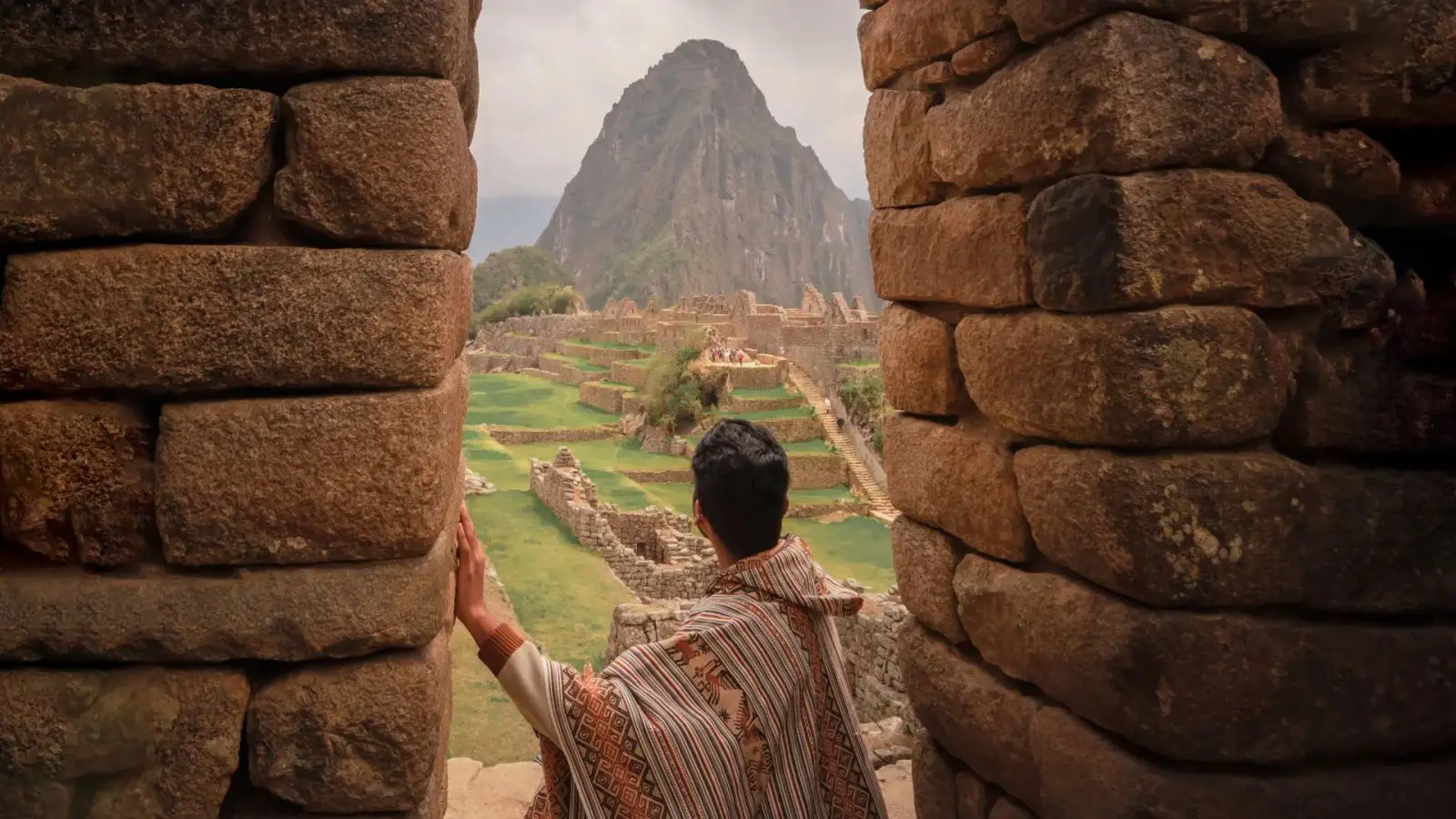
Short answer: Machu Picchu tickets are sold by Peru’s Ministry of Culture through its official online sales platform, with a limited number of visitors per day. Each ticket is in your name and tied to a date, an entry time and a circuit (route); routes with Huayna Picchu or Machu Picchu Mountain sell out first. For high season (June–August and holidays) book weeks or months ahead, before your train, and check prices and rules on the day you buy. Our Cusco to Ollantaytambo station transfer starts from US$51 (S/ 180) per vehicle.
How the Machu Picchu ticket system works
To protect the sanctuary, the Ministry of Culture caps daily visitors, spreads entry across time slots and sends people along signposted one-way routes. Your ticket fixes four things:
- The date: valid that day only.
- The entry time: you go in during a specific slot; arriving late can cost you entry.
- The circuit or route: a fixed path you can’t switch once inside.
- The holder: the name and passport or ID used to buy; at the gate you show that same original document.
The rules change often: the number and layout of circuits, capacity, prices, time allowed inside and change conditions have been revised several times in recent years. That’s why this guide doesn’t quote circuit numbers or fares: check them on the official Ministry of Culture platform on the day you buy.
Beware of unofficial websites: look-alike sites and paid ads resell at a mark-up or never deliver. Reach the platform from the Ministry of Culture’s official website, not from an ad, or book through a trusted operator that issues the ticket in your name.
Machu Picchu circuits: which route to choose
Leaving aside route codes, which keep changing, there are three broad types: upper or panoramic routes, along the higher terraces and the viewpoints for the postcard photo; lower or classic routes, through the urban sector, closer to temples and plazas; and routes with a mountain, which add Huayna Picchu or Machu Picchu Mountain to part of the citadel and have the smallest quotas. Some seasons bring extra add-ons. Before paying, open each route’s map on the platform to see which sectors it includes.
| If you want… | Type of route | Best for | Keep in mind |
|---|---|---|---|
| The classic postcard photo | Upper or panoramic | First-timers, photographers | Check it includes the upper viewpoints; morning cloud can take a while to lift. |
| Temples up close | Lower or classic | History lovers, ideally with a guide | May not include the view from above. |
| The fullest walk | A route combining upper and lower sectors, if one exists, or two tickets | Travellers staying in Aguas Calientes | Two tickets mean two payments and two slots; check the conditions. |
| The Huayna Picchu hike | Route with Huayna Picchu | Fit hikers with a head for heights | Very steep stairs; the first to sell out. |
| The Mountain hike | Route with Machu Picchu Mountain | Anyone after a long hike | Higher and longer, less exposed trail; several hours. |
Huayna Picchu or Machu Picchu Mountain?
Huayna Picchu is the pointed peak behind the ruins in the famous photo (approx. 2,700 m): a short but very steep climb on narrow steps with exposed sections. Machu Picchu Mountain, on the opposite side, tops 3,000 m: longer and harder on the lungs, but on a wider path, with views over the whole site and the Urubamba canyon. Check the platform for any age or health restrictions.
Step by step: how to buy Machu Picchu tickets
- Pick your date with the train in mind: on a day trip from Cusco only mid-morning or later slots work; if you sleep in Aguas Calientes, you can take the first ones.
- Go to the official Ministry of Culture platform and distrust “discounted” prices.
- Check availability and maps: choose the route first, then the time slot.
- Enter your details exactly as on the document you’ll carry. If you qualify for a reduced rate (for example students or children, under the categories in force), bring proof.
- Read the change and refund conditions before paying; if they aren’t clear, assume no changes.
- Save the ticket on your phone for offline use, and on paper.
- Then book the train (PeruRail or Inca Rail) and the bus from Aguas Calientes to the citadel, a separate ticket. On foot, a stepped trail takes approx. 1 h 30 min.
What about Aguas Calientes? At times a limited number of tickets has been sold in town, usually for the following days and with no guarantee. Treat it as a fallback, not a plan.
When to book: high season, rainy season and the best time to go
- June to August (dry, high season): weeks or months ahead, mountain routes even earlier. It overlaps with summer holidays, Inti Raymi (24 June) and Peru’s national holidays (late July).
- Public holidays, Easter week and Christmas–New Year: also sell out fast.
- May, September and October: dry with slightly lower demand; don’t leave it late.
- November to March (rainy season): easier availability, more cloud and possible train changes; January and February are the wettest.
The citadel sits at approx. 2,430 m, lower than Cusco (approx. 3,400 m), so altitude matters less there except on the mountains. To choose a month, read our guide to the best time to visit Cusco.
How to plan the day: train, bus and entry time
The most common mistake is buying ticket and train without lining up the times. Work backwards from your slot:
- Cusco to Ollantaytambo: approx. 1 h 45 min to 2 h by road; leave 2.5–3 h before your train.
- Train to Aguas Calientes: approx. 1 h 30 min to 2 h from Ollantaytambo; considerably longer from Poroy, which runs seasonally.
- Queue and bus to the citadel: the ride takes approx. 25–30 min, and in high season the queue can be long.
Rule of thumb: leave 1 h 30 min to 2 h between the train’s arrival and your entry, and another 1.5–2 h between leaving the site and your return train. If it doesn’t fit, stay the night in Aguas Calientes.
Day trip or overnight in Aguas Calientes?
A day trip only works by train: you leave before dawn, return at night and your slot will be mid-morning or around midday. Sleeping in town the night before gets you the first slots with no rush (see our Cusco to Aguas Calientes guide). On the budget route you arrive in the afternoon, so your ticket must be for the next day: see the Cusco to Hydroelectric guide.
Check the station on your train ticket: most trains leave from Ollantaytambo, and in some seasons PeruRail also runs from Poroy, 30–40 min from Cusco, served by our Poroy station transfer. If in doubt, read the guide to Cusco’s train stations.
On the day: documents, guides and what’s not allowed
What to bring: the original passport you bought with (if you’ve renewed it, bring both), your entry and bus tickets printed and on your phone, and a small daypack with layers, a rain poncho, sunscreen and water in a reusable bottle.
What’s not allowed: the list gets updated, but in general large bags and backpacks, drones, eating inside the sanctuary and leaving the marked route are not permitted. Check the current rules before you go and leave your suitcase at the hotel. Toilets are at the entrance area, not along the routes.
Guided visits
An official guide explains how the citadel was built and what each sector was for. Whether a guide is mandatory, and how many people one may lead, has changed over the years: check the current rule when you buy. Book one through your operator or hire an official guide in Aguas Calientes or at the entrance; in high season, book ahead. Ask to see their licence and agree on length and private or group format.
Tips and mistakes to avoid
- Booking the train before the ticket: if no matching slot is left, the train is useless.
- Buying from unofficial sites: mark-ups or fake tickets.
- Picking a route without its map: you might miss the photo you came for.
- Climbing a mountain straight after landing: acclimatise for a couple of days in Cusco or the Sacred Valley.
- Arriving right on time: between train, queue and bus, any delay can cost you your slot.
How Viajes D’MARC fits into your visit
Our job is to get you to your train on time, and therefore to your slot, and to have someone waiting when you return:
- Ollantaytambo or Poroy station: hotel pickup at the time your train requires, with the return matched to your train number.
- Hydroelectric: our private Cusco to Hydroelectric transfer starts from US$157 (S/ 550) per vehicle and leaves when you want.
- Packages including the entry ticket: the Cusco and Machu Picchu 4-day package and the Sacred Valley and Machu Picchu 2-day package line up ticket, times and transfers; check what each includes.
Every transfer is private, with a local driver, SOAT insurance, satellite tracking and a fixed price per vehicle confirmed before you travel. For the whole journey, read our guide to getting from Cusco to Machu Picchu.
Why trust this guide
It’s written by Viajes D’MARC’s local drivers, who have driven travellers to Ollantaytambo, Poroy and Hydroelectric every day since 2010 and see what goes wrong when train and entry times don’t match. Updated November 2026. Circuits, capacity, prices and rules are set by the Ministry of Culture and change often: confirm them on the official platform when you buy.
Frequently asked questions
Where do I buy Machu Picchu tickets?
On the official online sales platform of Peru’s Ministry of Culture, or through a trusted operator that issues them in your name. Avoid unofficial websites and resellers.
How far in advance should I book Machu Picchu tickets?
For June to August and public holidays, weeks or months ahead; mountain routes even earlier. The rest of the year you usually need less notice, but check availability before booking your train.
Which Machu Picchu circuit is best?
An upper or panoramic route for the postcard photo, a lower route for the temples, or a route with Huayna Picchu or the Mountain for a hike. Layouts change, so check each route’s map on the official platform.
How much is a Machu Picchu ticket?
It depends on the route and your category (general, student, child, Peruvian resident) and is updated often. Check the current fare on the official platform on the day you buy.
Can I buy tickets in Aguas Calientes?
At times a limited number has been sold in town, with no guarantee and long queues. Don’t rely on it.
Is the bus to the citadel included?
No, it’s a separate ticket. You can also walk up in approx. 1 h 30 min.
How do I get from Cusco to the train station?
With Viajes D’MARC, the private Cusco to Ollantaytambo station transfer starts from US$51 (S/ 180) per vehicle, at a fixed price, with pickup timed to your train.