
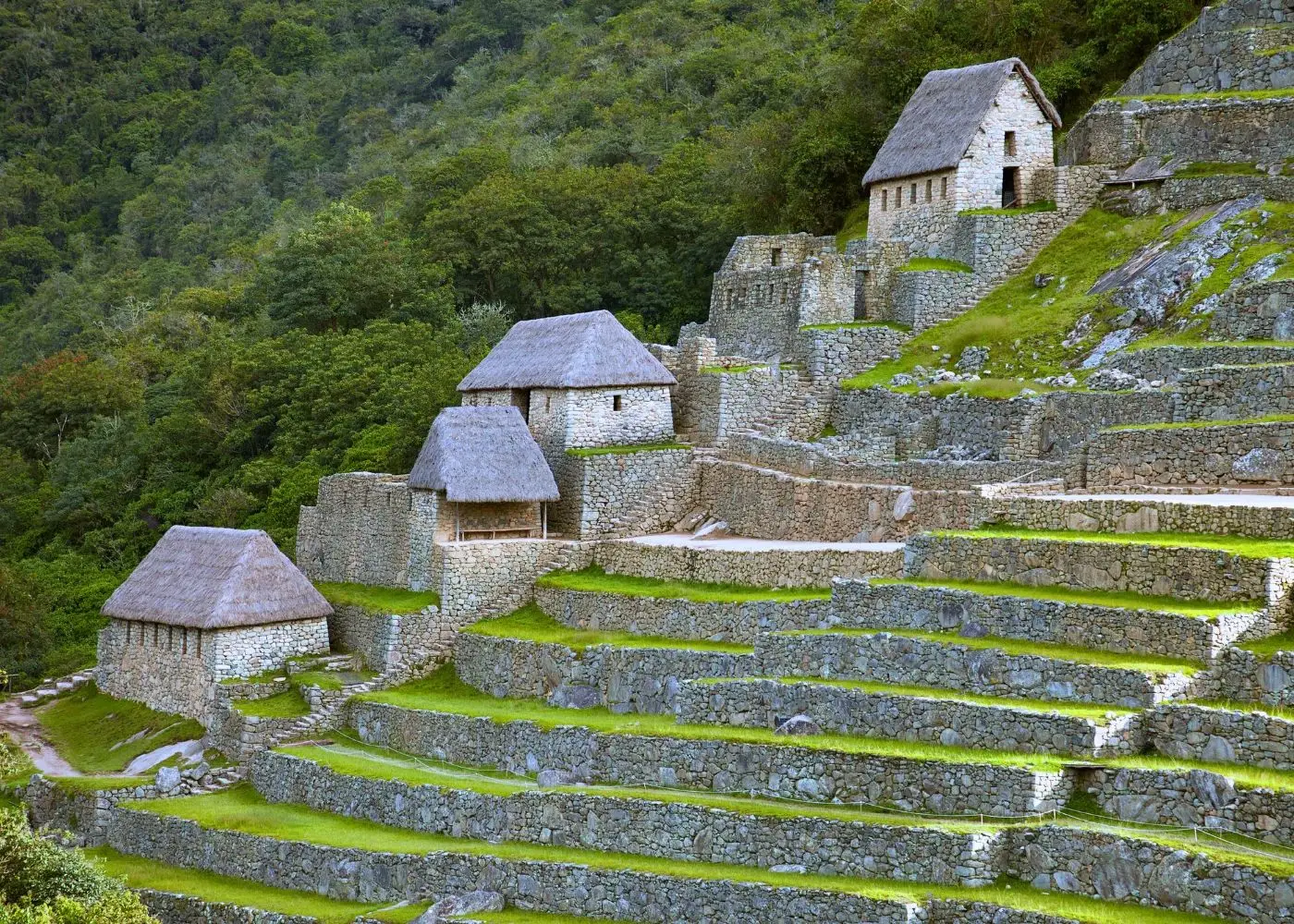
Short answer: the best time to visit Cusco and Machu Picchu is the dry season, May to September: sunny days and clear skies, with cold nights and the biggest crowds from June to August. For fewer people, April, May, September and October offer the best balance. The rainy season (approx. November to March) is still workable, but January and February are the wettest months, mountain roads can be hit by landslides and the Inca Trail closes every February.
Cusco’s three seasons
Cusco sits at about 3,400 m and close to the tropics, so instead of four seasons it has a dry one and a rainy one. The swing between day and night matters more than the calendar: at midday a light layer is enough, and by late afternoon you need a warm jacket in any month. At this altitude the sun burns all year.
Dry season (May to September)
This is the Andean winter: it hardly rains and the snow peaks look sharp. Nights are the coldest of the year, with frost below 0 °C possible in June and July, and much colder conditions on pre-dawn tours above 4,000 m. June to August is high season: northern summer holidays, Inti Raymi and Peru’s national holidays.
- Best for: Machu Picchu with views, treks, Rainbow Mountain, Humantay Lake and long road trips.
- Downsides: more people, tickets and trains that sell out sooner, and higher hotel rates.
Rainy season (November to March)
The rains build through October and November and peak in January and February. It rarely rains all day: many mornings start clear and showers arrive in the afternoon. The countryside turns deep green and there are fewer visitors, except over Christmas and New Year.
- Best for: travellers with flexible dates who want quieter sites and green landscapes.
- Downsides: clouds over Machu Picchu and the peaks, muddy trails, landslides (huaicos) that can close mountain roads for hours, and the classic Inca Trail closed in February for maintenance (Machu Picchu stays open).
Shoulder months: April and October
In April the rains end, the hills are still green and the crowds have not arrived. In October the first rains appear and there are far fewer people than in August. Together with May and September, they give the best mix of weather, price and breathing room.
Cusco weather by month
General descriptions of what we see on the road every year; mountain weather changes day to day, so check the forecast before each excursion.
| Month | Weather | Crowds | Notes |
|---|---|---|---|
| January | Very wet; some clear mornings | Medium (high at New Year) | Landslides on the Hydroelectric road. |
| February | The wettest month | Low | Inca Trail closed; Carnival (Feb or March). |
| March | Frequent rain, easing | Low | Easter in some years. |
| April | Short showers, green hills | Medium | Easter in many years. |
| May | Dry season begins | Medium, rising | Sometimes Qoyllur Rit’i and Corpus Christi. |
| June | Sunny days, cold nights with possible frost below 0 °C | High | Festival month; Inti Raymi on the 24th. |
| July | Dry, night frost possible | Very high | Paucartambo festival mid-month; national holidays on the 28th–29th. |
| August | Dry, sometimes windy | Very high | Month of the Pachamama; book well ahead. |
| September | Dry, slightly milder days | Medium–high | Good weather–crowd balance. |
| October | More cloud, first rains | Medium | Fewer people than August. |
| November | Regular rains begin | Low–medium | Good prices. |
| December | Rainy | Medium (high at Christmas) | Santurantikuy on the 24th. |
Festivals and key dates
Festivals fill hotels, trains and transfers, and several are moveable, so check the calendar for your year.
- Easter / Holy Week (March or April): on Holy Monday the Señor de los Temblores, Cusco’s patron, is carried in procession.
- Qoyllur Rit’i (May or June): an Andean pilgrimage to the Sinakara sanctuary below Ausangate, held before Corpus Christi. It is a religious event at high altitude in bitter cold, not a show.
- Corpus Christi (May or June, about 60 days after Easter): saints and virgins from several parishes gather in the Cathedral, and everyone eats chiriuchu. See our Corpus Christi in Cusco guide.
- Inti Raymi (June 24): the Festival of the Sun at Qoricancha, the Plaza de Armas and Sacsayhuamán; the busiest week of the year.
- Virgen del Carmen (mid-July): a huge dance festival in Paucartambo.
- Fiestas Patrias (July 28–29): national holidays with lots of domestic travellers.
- Santurantikuy (December 24): a nativity-figure and crafts market in the Plaza de Armas.
What each season means for your excursions
Best time to visit Machu Picchu
Machu Picchu is lower (about 2,400 m) and on the edge of the cloud forest, so it is warmer and more humid than Cusco and rain is possible in any month. In the dry season early mist usually lifts by mid-morning; in the rains clouds come and go and downpours can be heavy. If you only have one day, a mid-morning entry gives you more margin.
In the rainy season trains from Poroy or San Pedro are usually suspended and operators run a bimodal service (bus to Ollantaytambo, train from there). The simplest plan is to board in Ollantaytambo with a private transfer from Cusco to Ollantaytambo station (approx. 1.5 to 2 hours). More in our Cusco train stations guide and Cusco to Machu Picchu guide.
The Hydroelectric route (about 6 hours by road via Santa Teresa) is best from May to October: in the rains landslides often close the road. If you go anyway, a private car to Hydroelectric lets you leave early with time to spare.
Rainbow Mountain and Humantay Lake
Humantay sits at about 4,200 m and Vinicunca at about 5,000 m. In the dry season the colours and glaciers look their best, but dawn is below freezing. In the rains it can snow, and snow sometimes hides the colours; expect mud and clouds over Ausangate or Salkantay. Both run all year, and leaving before dawn catches the clearest hours. On a private Rainbow Mountain tour or Humantay Lake tour you choose the departure time. Save them for the end and read our altitude sickness guide.
Sacred Valley
About 500 m lower with a milder climate, the valley works all year and is ideal for your first nights. It is greener in the rains; in the dry season the Maras salt pans look whiter, because that is when salt is harvested. Go straight from the airport with the Sacred Valley transfer and explore on a private Sacred Valley tour.
Road trip to Puno
The roughly 390 km route crosses the altiplano and La Raya pass (over 4,300 m). In the dry season skies are clean and nights in Puno very cold; from December to March afternoon rain or hail is normal, with occasional snow at La Raya, so travel in daylight. Details in our Cusco to Puno guide.
Step by step: planning your trip around the season
- Pick your season: views and hiking, May to September; fewer people and better prices, April, October or November; festivals, June.
- Lock in what has a quota: your Machu Picchu ticket (daily capacity per circuit and time slot), Huayna Picchu and Inca Trail permits, which sell out months ahead in high season.
- Book the train (PeruRail or Inca Rail) to match your entry time. Fares and timetables change, so confirm them with each operator.
- Order by altitude: first nights in the Sacred Valley, then Cusco, and tours above 4,000 m at the end.
- Leave a buffer day between Machu Picchu and your flight out, especially from November to March.
- Book transfers: the Cusco airport to hotel transfer costs from US$10 (S/ 35) per vehicle, with a fixed price confirmed before you travel, and saves you queues and haggling on arrival in peak season.
What to pack by season
- All year: layers, high-SPF sunscreen, sunglasses, a sun hat, broken-in shoes and some cash in soles.
- Dry season: a down jacket, wool hat, gloves and thermals for nights and early starts; lip balm for the dry air.
- Rainy season: a waterproof jacket or poncho, shoes that handle mud, quick-dry clothes and bags for your phone and documents. You still need warm layers.
- Machu Picchu: a light rain shell, insect repellent and the passport you used to buy your ticket.
Tips and mistakes to avoid
- Assuming June is summer: in Cusco, June and July have the coldest nights. Ask whether your hotel has heating.
- Ruling out the rainy season: outside January and February, many days see only a few hours of rain.
- Leaving the highlights for the afternoon in the rains: plan hikes and viewpoints for the morning.
- Judging the day by the sky over Cusco: Machu Picchu or the valley can have very different weather.
- Forgetting the festivals: during Inti Raymi or Corpus Christi some central streets close, so allow extra time to reach the station or airport.
Why trust this guide
It is written by Viajes D’MARC’s local drivers, who since 2010 have driven the roads of Cusco, the Sacred Valley, Hydroelectric and Puno every day in sun, rain and frost. Last updated: November 2026. Festival dates and third-party timetables and prices change, so confirm them with each operator or with Peru’s Ministry of Culture.
Frequently asked questions
What is the best month to visit Cusco?
May and September combine dry weather with fewer people than June to August. For festivals, choose June; for lower prices and green landscapes, April or November.
When is the rainy season in Cusco?
Approx. November to March, with January and February the wettest months. Rain usually falls in the afternoon, though some days it rains non-stop.
Can you visit Machu Picchu in the rainy season?
Yes, it is open all year. Bring a rain jacket and build slack into your itinerary. What closes in February is the classic Inca Trail, not the citadel.
Is Cusco very cold in June and July?
Days are usually sunny, but nights are cold and frost is possible. Not every hotel has heating, so ask when you book.
Does it snow at Rainbow Mountain?
It can, mainly in the rainy season, and snow sometimes covers the colours. The tour runs all year.
How far ahead should I book for high season?
Machu Picchu tickets and trains as soon as your dates are set; the Inca Trail, months ahead. The airport to hotel transfer, from US$10 (S/ 35) per vehicle, as soon as you have flights.