Short answer: Cusco sits at about 3,400 m (11,150 ft), and most visitors feel the altitude in the first 24 to 48 hours: breathlessness on stairs, a mild headache, tiredness or poor sleep. For most people, altitude sickness in Cusco is manageable if you take it slow, drink water, eat light and skip alcohol on day one. The single best trick is to sleep in the Sacred Valley (about 2,800–2,900 m) first and save high tours like Humantay Lake or Rainbow Mountain for the end of your trip. This is travel information, not medical advice.
How high is Cusco? Altitude of each destination
Cusco city is at roughly 3,400 m above sea level and the airport at about 3,300 m, so you notice the thin air as soon as you step off the plane. But your trip is not equally high everywhere: the Sacred Valley and Machu Picchu are much lower, and the mountain day trips are much higher.
| Place | Approx. altitude | What it means for you |
|---|---|---|
| Aguas Calientes / Machu Picchu | 2,000 m / 2,400 m | The lowest point of the classic route; very few people feel the altitude here. |
| Ollantaytambo, Urubamba, Pisac | 2,800–2,950 m | Ideal for your first nights. |
| Cusco city and airport | 3,300–3,400 m | You will feel it: take the first two days slowly. |
| Sacsayhuaman, Tambomachay, Chinchero | 3,600–3,750 m | Short climbs on the city tour or on the road to the valley. |
| Humantay Lake | 4,200 m | Steep 1.5 to 2-hour hike up. |
| Ausangate 7 Lakes | 4,600 m | Long hike on a day of about 14 hours. |
| Palcoyo Mountain | 4,900 m | Short walk, but very high. |
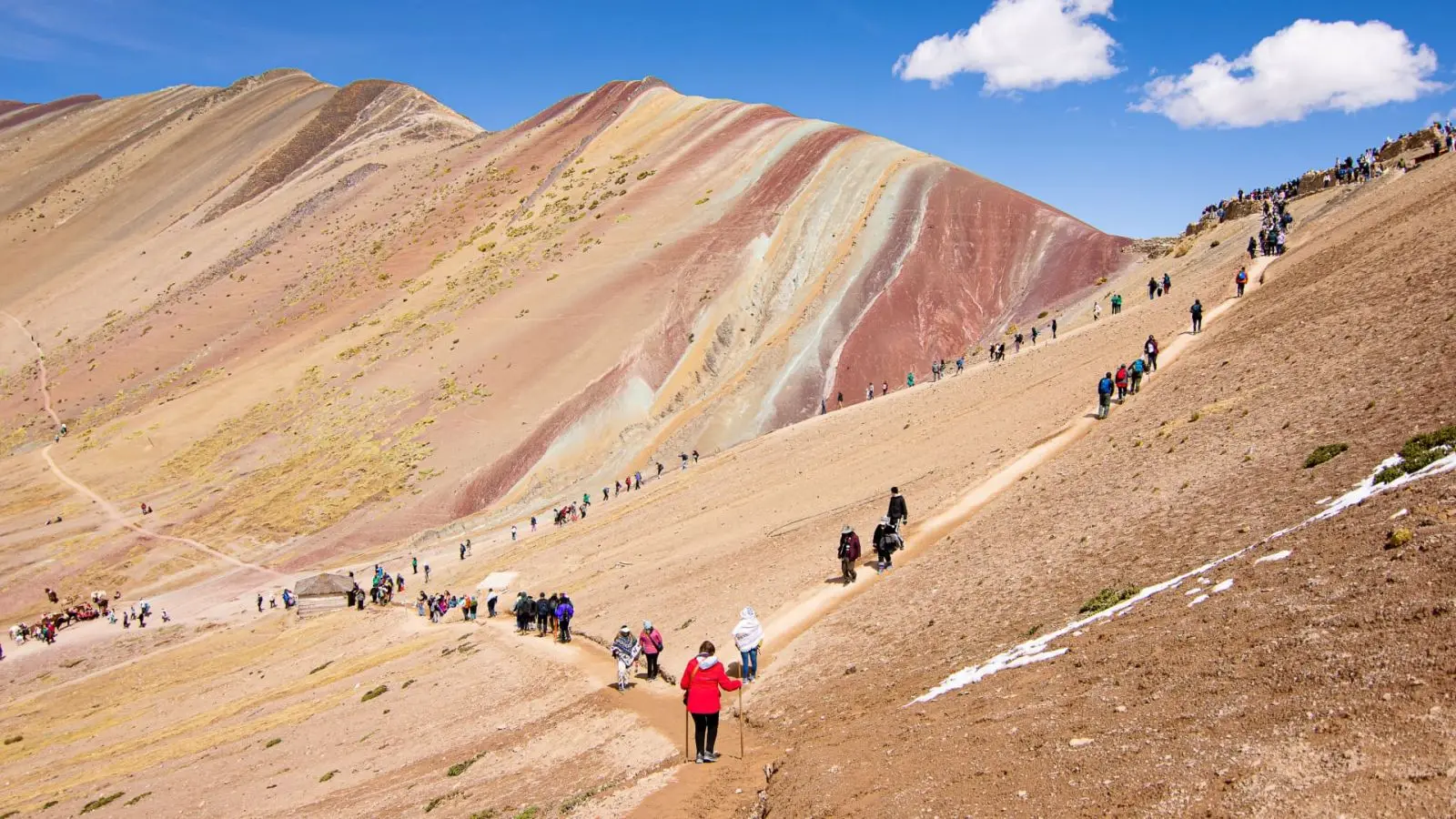
| Rainbow Mountain (Vinicunca) | approx. 5,000 m | The highest point of almost every trip. |
What is soroche and what does it feel like?
Soroche is the Andean name for altitude sickness, or acute mountain sickness. At 3,400 m every breath carries less oxygen and your body needs a few days to adjust. Symptoms usually show up within the first hours or the next day, and fitness does not protect you: a runner who rushes up the hills can feel worse than an older traveller who walks slowly.
Mild symptoms (the common ones)
- Headache.
- Shortness of breath and a racing heart when you exert yourself.
- Tiredness or light dizziness.
- Loss of appetite or nausea.
- Poor sleep or waking up several times at night.
These usually ease within one to three days with rest, water and no further climbing.
Warning signs: see a doctor
- A severe headache that does not improve with rest.
- Repeated vomiting.
- Breathlessness even at rest, or a persistent cough.
- Confusion, extreme drowsiness or unusual behaviour.
- Clumsiness when walking or loss of balance.
- Chest pain or tightness, or bluish lips or nails.
With any of these, do not wait for it to pass: tell your hotel or guide, get medical help straight away and do not go any higher. Cusco has private clinics with emergency services.
How to prevent altitude sickness in Cusco
- Go slow for the first 24–48 hours. Walk at an easy pace, stop on hills and do not carry heavy loads; let your driver or hotel handle the luggage.
- Drink water regularly. Andean air is very dry, so keep a bottle with you.
- Eat light: soups and small portions for the first couple of days.
- Skip alcohol on day one (ideally the first two days) and cut down on smoking.
- Coca or muña tea: a local custom, and many hotels offer a cup when you arrive. It is a warm drink, not a medicine, and it does not replace acclimatization. Do not take coca leaves or tea bags home: they are banned in many countries.
- Protect yourself from sun and cold: the high-altitude sun burns fast and nights are chilly.
Step by step: acclimatize by starting in the Sacred Valley
What matters most is not the altitude of one place but how fast you go up and where you sleep. So instead of staying in Cusco when they land, many travellers go straight to the Sacred Valley, about 500 m lower, sleep there, continue to Machu Picchu (lower still) and return to Cusco at the end, already acclimatized. As a bonus, Ollantaytambo is the main station for trains to Machu Picchu.
The Viajes D’MARC private Cusco airport to Sacred Valley transfer costs from US$57 (S/ 200) per vehicle, not per person: your driver waits at arrivals with a name sign, loads your bags and takes you straight to your hotel. The road climbs briefly to about 3,750 m on the Chinchero plateau before dropping into the valley; the drive takes approx. 1.5 to 2 hours, and what counts is sleeping lower.
Sample 7-day acclimatization itinerary
- Day 1: airport to the valley, a light lunch and an afternoon of rest.
- Day 2: Pisac, Moray, Maras or Ollantaytambo at an easy pace on a private Sacred Valley tour.
- Day 3: train from Ollantaytambo to Aguas Calientes (see our Cusco to Ollantaytambo guide).
- Day 4: Machu Picchu early, train back and transfer to Cusco. Full details in our Cusco to Machu Picchu guide.
- Day 5: Cusco on foot and a city tour in the afternoon.
- Days 6 and 7: high tours, lowest first: Humantay Lake, then Rainbow Mountain.
If you are staying in Cusco from day one, book the Cusco airport to hotel transfer (from US$10 (S/ 35)), keep that day free and allow two or three nights before any tour above 4,000 m. More on arriving in our Cusco airport guide.
High-altitude tours: Humantay, Rainbow Mountain, Palcoyo and Ausangate
These day trips leave Cusco around 4:00–4:30 am, and within a few hours you go from sleeping at 3,400 m to hiking between 4,200 and 5,000 m. Do them at the end of your trip, well rested and without alcohol the night before.
- Humantay Lake (4,200 m): drive via Mollepata to Soraypampa, then a steep 1.5 to 2-hour climb to the turquoise lake below Salkantay mountain. A good first high tour: private Humantay Lake tour.
- Rainbow Mountain – Vinicunca (approx. 5,000 m): about 2 hours of hiking to the viewpoint, with views of Ausangate. Save it for last: private Rainbow Mountain tour.
- Palcoyo (4,900 m): three rainbow mountains and a stone forest with a walk of about 40 minutes. Less effort than Vinicunca, but almost the same altitude: Palcoyo tour.
- Ausangate 7 Lakes (approx. 4,600 m): a loop hike from Pacchanta past glacial lakes and alpacas, with hot springs at the end: 7 Lakes of Ausangate tour.
At Humantay and Vinicunca, local families usually offer horses for part of the trail (paid separately, on the spot). On a private tour you choose the departure time, hike at your own pace and the driver waits for you; if someone feels unwell, you can head back without waiting for a group.
Best time of year and weather
From May to September (dry season) skies are usually clear, but early mornings at altitude drop below 0 °C (32 °F) and the air is even drier. From November to March it rains often, trails get muddy and it can snow at Vinicunca or Humantay. Year-round, bring layers, gloves, a warm hat, sunscreen and water.
What to do if you get symptoms
- Stop and rest; do not go any higher that day.
- Drink water and eat something light.
- No alcohol, and no sleeping pills or other medication unless a doctor tells you to.
- Tell someone: your guide, driver or hotel reception. Some hotels in Cusco have oxygen available, so ask.
- If you feel worse on a tour, turn back: going down is usually what helps most.
- Get medical help for any warning sign, or if you are not better after a day of rest.
If you have a transfer or tour booked with Viajes D’MARC and feel unwell, message us on WhatsApp (+51 914 391 285, 24/7) and we will work out together how to rearrange the day.
Before you travel: children, older travellers and medical advice
- Children and babies: they can get altitude sickness too and cannot always explain it. Watch for irritability, refusing food, vomiting or unusual sleepiness. Check with your paediatrician before the trip.
- Older travellers: many visit Cusco without problems at a gentle pace; a check-up beforehand is wise, especially for tours above 4,000 m.
- Heart or lung conditions, high blood pressure, pregnancy, chronic illness or altitude sickness on previous trips: talk to your doctor before booking and ask specifically about the high tours.
Medication: some travellers take medication prescribed by their doctor, such as acetazolamide. It must be prescribed: your doctor decides whether it is right for you. Do not self-medicate or take someone else’s pills, and travel with insurance that includes medical cover.
Common mistakes to avoid
- Booking Rainbow Mountain for the day after you land.
- Rushing up the steep streets of San Blas or to Sacsayhuaman with a heavy backpack.
- Hiding symptoms so you don’t “waste” a paid tour.
- Stacking a pre-dawn tour straight after returning from Machu Picchu, with no rest day.
- Celebrating your first night with pisco sours.
Why trust this guide
It is written by the local drivers of Viajes D’MARC, who since 2010 have driven newly arrived travellers from the airport to the Sacred Valley every day, and taken them before dawn to Humantay and Rainbow Mountain, so they see first-hand how the altitude affects people. Last updated: November 2026. It is practical travel information and does not replace advice from a doctor.
Frequently asked questions
What is the altitude of Cusco?
About 3,400 m (11,150 ft) in the historic centre and about 3,300 m at the airport. The Sacred Valley is lower (2,800–2,950 m) and Machu Picchu sits at about 2,400 m.
How long does altitude sickness last in Cusco?
For most travellers, mild symptoms ease within one to three days with rest, water and no further climbing. If they get worse or a warning sign appears, get medical help.
Should I sleep in the Sacred Valley or Cusco first?
For acclimatization, the Sacred Valley, which is about 500 m lower. You can go straight there with a private airport to Sacred Valley transfer, from US$57 (S/ 200) per vehicle, and leave Cusco for the end of your trip.
Does coca tea cure altitude sickness?
It is a widespread local custom and a pleasant warm drink, but it is not a medicine and does not replace acclimatization. Do not take coca leaves home: they are banned in many countries.
How many days should I wait before Rainbow Mountain or Humantay?
As a rule of thumb, at least two or three nights in Cusco or the Sacred Valley before any tour above 4,000 m. Ideally, save them for the end of your trip.
Should I take pills for the altitude?
Some travellers take medication prescribed by their doctor, such as acetazolamide, but only with a prescription. Talk to your doctor before the trip and do not self-medicate.
Will I get altitude sickness at Machu Picchu?
It is rare: Machu Picchu is at about 2,400 m, lower than Cusco. What tires people out are the Inca stairs, especially on Huayna Picchu.