
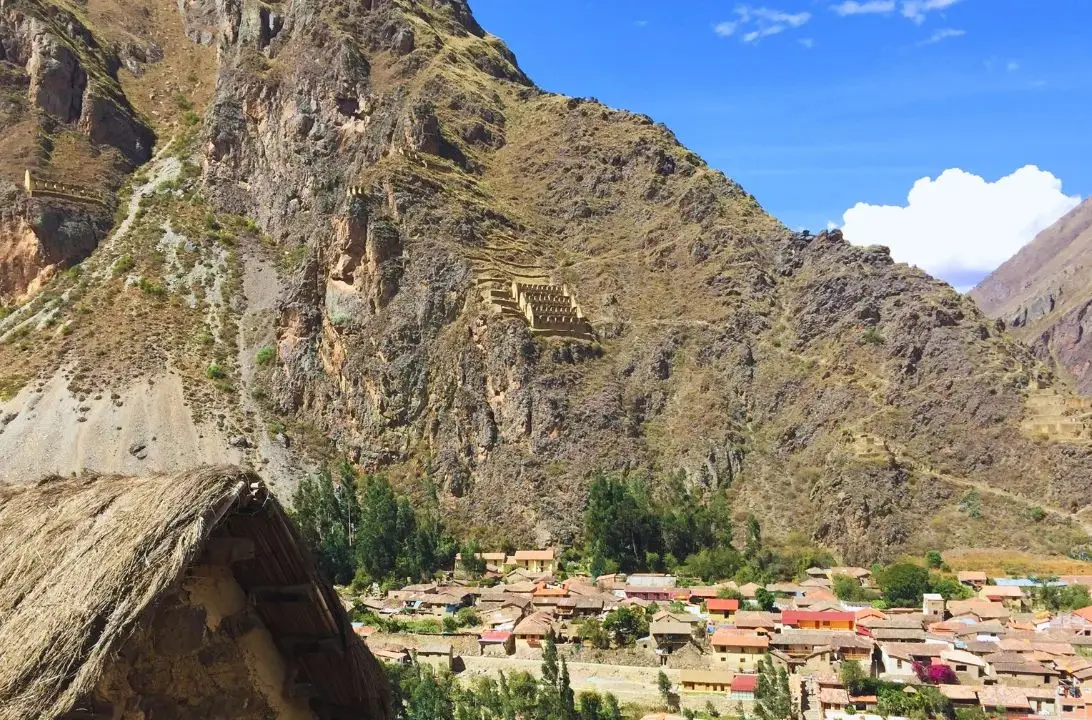
Short answer: Ollantaytambo is a still-inhabited Inca town at about 2,800 m, roughly 2 hours from Cusco, where the Sacred Valley road ends and most trains to Machu Picchu begin. The must-sees are the archaeological park (terraces, Temple of the Sun and the Baño de la Ñusta, entered with the Cusco Tourist Ticket), the Pinkuylluna storehouses and the Inca streets of the old town. Half a day covers the essentials, but one night is ideal. A private transfer from Cusco starts at US$51 (S/ 180) per vehicle.
What Ollantaytambo is, and why it deserves more than a stopover
Ollantaytambo sits at the western end of the Sacred Valley, where the Patacancha River meets the Urubamba. Many travellers know it only as “the train station for Machu Picchu”, yet it’s one of the few places in Peru where people still live inside an Inca town plan, with original walls, doorways and water channels.
The Inca ruler Pachacutec made it a royal estate, with a temple, farming terraces and storehouses. Decades later it became Manco Inca’s stronghold during the resistance against the Spanish: in 1537 his forces drove back Hernando Pizarro’s cavalry here, one of the few Inca victories of the conquest.
- Altitude: about 2,800 m, some 600 m lower than Cusco.
- Distance: about 72 km from Cusco (1h45 to 2h) and about 20 km from Urubamba.
- Train: the main station for PeruRail and Inca Rail trains to Aguas Calientes.
- Getting there: taxi, colectivo, tours and timings are covered in our Cusco to Ollantaytambo guide.
10 things to do in Ollantaytambo
1. The Ollantaytambo ruins: terraces and Temple of the Sun
This is what you see from the square: a whole hillside of terraces climbing to the religious sector. At the top is the Temple of the Sun, with its famous wall of six pink stone monoliths fitted together with thin stone strips. Carved blocks that were never set in place lie around it, and from up here the site’s strategic position is obvious, with views down the valley and across to the storehouses on the opposite mountain.
On the way down, look for the Baño de la Ñusta (Princess Bath), a fountain carved into the rock in the lower part of the site, and the channels where water still runs. Allow 1.5–2 hours.
2. The Cachiccata quarries
The Temple of the Sun stones didn’t come from this hillside: they were cut at the Cachiccata quarries, across the river, several kilometres away and much higher up. The Incas brought them down, across the river and up to the temple, leaving a few “tired stones” abandoned along the way. You can see the quarry slopes from the top of the site; hiking there is long and demanding, best done with a guide.
3. The Pinkuylluna storehouses
Facing the ruins, on Pinkuylluna mountain, are the qolqas: Inca stone storehouses built where cool, breezy air kept food fresh. A trail zigzags up from the town streets; the climb takes about 30–45 minutes, it’s steep and has stretches with no railing. Access has so far been free with no ticket, but access conditions can change, so confirm locally. From the top you get the best view over Ollantaytambo, its terraces and its street grid.
4. The Inca town and its canchas
The old quarter, north of the main square, keeps the Inca grid: blocks called canchas, each with an outer wall and a single doorway onto the street, where local families still live today. Wander the narrow lanes slowly and follow the water channels running beside the pavements. These are homes, so if a family opens its courtyard to visitors, respect their space and ask before taking photos.
5. The main square and the artisan market
The Plaza de Armas is the meeting point of the town: cafés with terraces, small restaurants and a view of the terraces lit by the late afternoon sun. Next to the entrance of the archaeological park there is an artisan market with textiles, ceramics and souvenirs; prices are usually a little lower than in central Cusco, and polite bargaining is normal.
6. Hike up the Patacancha valley to Pumamarca
North of town, a quiet path follows the Patacancha River up past fields and farmhouses to Pumamarca, a small Inca site with walls and terraces overlooking the valley, which few visitors reach. It’s a half-day outing on foot, or a short drive plus a walk. Go with water and sun protection, and confirm access and any entry fee locally before setting off.
7. Meet the weaving communities of the Patacancha valley
Higher up the same valley live Quechua communities that still weave with backstrap looms and natural dyes, and wear their traditional red ponchos. The respectful way to visit is with a local guide or through a community project, buying textiles directly from the weavers. Ask before taking photos.
8. Ñaupa Iglesia, an Inca shrine carved into the rock
A short drive back towards Urubamba, near the village of Pachar, a steep path climbs to a rock shelter with an Inca altar and a finely carved stone wall, later used as a church, hence its name (“old church”). It’s a quick, off-the-beaten-path stop that most tours skip; the climb is short but steep, so wear shoes with good grip.
9. Combine it with Maras, Moray and Chinchero
The salt pans of Maras, the circular terraces of Moray and the weaving town of Chinchero are all about an hour away and fit in a single day. You’ll find the details below and in our Maras and Moray guide.
10. Catch the train to Machu Picchu
Ollantaytambo is where most trains to Aguas Calientes start, and the ride along the Urubamba river into the cloud forest is a highlight in itself. Sleeping here the night before lets you walk to the station; see how in the section on the Machu Picchu train below.
How long do you need in Ollantaytambo?
| Plan | What you can see | Best for |
|---|---|---|
| Half day (3–4 h) | Archaeological park and a walk through the Inca town | Tour stopovers, or a few hours before your train |
| Full day | All of the above plus Pinkuylluna and a relaxed lunch; or add Maras and Moray | Travellers coming by private transfer or tour from Cusco |
| One night or more | The ruins at opening time without groups, Pinkuylluna in the afternoon, valley walks and an early train to Machu Picchu | Anyone heading to Machu Picchu or acclimatising |
Step by step: a day in Ollantaytambo
- Start early. If you’re staying in town, enter the archaeological park as soon as it opens. Coming from Cusco, leave around 6:00–7:00 to beat the tours.
- The ruins (1.5–2 h). Climb the terraces to the Temple of the Sun first, then come down via the Baño de la Ñusta.
- The Inca town (45 min to 1 h). Cross the square and explore the canchas.
- Have lunch in town and rest through the hottest hours.
- Pinkuylluna in the afternoon (1–1.5 h round trip), when it’s cooler. Come down before dark.
Tickets: the Cusco Tourist Ticket
The archaeological park doesn’t sell single-site entry: you need the Cusco Tourist Ticket (Boleto Turístico), either the full ticket or the partial circuit III ticket, which also covers Pisac, Chinchero and Moray. It’s sold in Cusco and generally at the ticket offices of the sites it includes. Prices, opening hours and validity are set by COSITUC and change, so check before you go. Our Cusco Tourist Ticket guide explains which one suits your plan.
- Pinkuylluna and the town streets are not part of the ticket.
Ollantaytambo and the Machu Picchu train
Most trains to Aguas Calientes leave from Ollantaytambo, which makes the town the best base for Machu Picchu. Our advice: sleep in Ollantaytambo the night before your train. You avoid a pre-dawn drive from Cusco, see the town calmly the afternoon before and walk to the station, about 10–15 minutes downhill from the square towards the river.
- Day 1: Cusco or the airport to the Sacred Valley, with stops if you like, and a night in Ollantaytambo. The Cusco airport to Ollantaytambo transfer drops you at your hotel door.
- Day 2: early train to Aguas Calientes (about 1h30 to 2h) and your Machu Picchu visit.
- Return: train back to Ollantaytambo and a transfer to Cusco or your valley hotel; staying in Urubamba, there’s an Ollantaytambo ⇄ Urubamba transfer.
Only small hand luggage is allowed on the train (check with your operator), so leave the big suitcase at your hotel. The full route is in our guides on how to get from Cusco to Machu Picchu and getting to Aguas Calientes. If you just need the ride to and from the station, book the Cusco ⇄ Ollantaytambo station transfer.
What to see near Ollantaytambo
The closest visits, with approximate driving times:
- Urubamba (about 20 km, roughly 30 min): the valley’s largest town, with hotels, restaurants and services; see our Urubamba guide.
- Maras and Moray (about 1 h): the terraced salt pans and the circular terraces of Moray, on the plateau above the valley. Details in our Maras and Moray guide.
- Chinchero (about 1 h): a weaving town with a colonial church built on Inca walls, on the short route back to Cusco.
The easiest way to combine them is a private tour. The Chinchero, Maras, Moray and Ollantaytambo tour can end in Ollantaytambo, perfect if you’re sleeping there before the train; the Sacred Valley VIP tour adds Pisac and Urubamba.
Best time of day, weather and altitude
Ollantaytambo is busiest from mid-morning to mid-afternoon, when full-day tours and travellers waiting for their train overlap. The best hours are first thing in the morning and late in the afternoon: the ruins are quieter, the light is better for photos and the climb is cooler.
- Dry season (roughly May to October): sunny days and cold nights; it’s high season, so expect more people.
- Rainy season (roughly November to March): rain mostly in the afternoon, a green valley and fewer visitors. Stone stairs get slippery, so wear shoes with good grip.
- The altitude advantage: at about 2,800 m, Ollantaytambo is some 600 m lower than Cusco, so sleeping here for your first nights helps you acclimatise. More in our guides to altitude sickness in Cusco and the best time to visit Cusco.
Tips and mistakes to avoid
- Seeing it only from the train window. Arriving just in time for the train and missing the town is the most common mistake. If you can, arrive the day before.
- Climbing at midday. The terraces have no shade; bring water, a hat and sunscreen.
- Forgetting your ticket or cash. If you didn’t buy the Tourist Ticket in Cusco, carry soles in cash in case the ticket office doesn’t take cards. ATMs in town are few.
- Doing Pinkuylluna in poor light or rain. The trail is steep and partly unrailed; come down before dark.
- Dragging suitcases through the old town. The Inca lanes are narrow and some have no vehicle access; ask your hotel where a car can drop you.
Why trust this guide
It’s written by Viajes D’MARC’s local drivers, who have taken travellers to Ollantaytambo every day since 2010: to the first trains before dawn, on Sacred Valley tours and to hotels in town. Last updated: November 2026. Tickets, opening hours and access are set by COSITUC, the Ministry of Culture and operators and can change, so confirm them before you go.
Frequently asked questions
What is there to do in Ollantaytambo?
The essentials are the archaeological park (terraces, the Temple of the Sun with its six monoliths and the Baño de la Ñusta), the Inca storehouses of Pinkuylluna facing the town, and the still-inhabited Inca quarter of canchas. With more time, hike up the Patacancha valley to Pumamarca, visit the weaving communities, stop at Ñaupa Iglesia or add Maras, Moray and Chinchero.
Is Ollantaytambo worth visiting?
Yes. It is one of the few places where people still live inside an original Inca town plan, its ruins are among the most impressive in the Sacred Valley, and it is the main station for the Machu Picchu train, so it fits naturally into most itineraries.
How much time do you need in Ollantaytambo?
Half a day (3–4 hours) for the ruins and the town; a full day if you add Pinkuylluna. One night is ideal, especially if you take the Machu Picchu train the next morning.
How much does it cost to enter Ollantaytambo?
The ruins are entered with the Cusco Tourist Ticket, either the full ticket or the partial circuit III ticket. Prices are set by COSITUC and change, so check before you go. Pinkuylluna has been free, but confirm locally.
What is the altitude of Ollantaytambo?
About 2,800 m above sea level, some 600 m lower than Cusco, which makes it a good first night for acclimatising.
Is it worth staying overnight in Ollantaytambo?
Yes, especially the night before your Machu Picchu train: you skip a 2-hour pre-dawn drive, see the ruins without the crowds and walk to the station.
How do I get from Cusco to Ollantaytambo?
It’s about 72 km and 1h45 to 2h by road. A Viajes D’MARC private transfer starts at US$51 (S/ 180) per vehicle; colectivos and tours are covered in our Cusco to Ollantaytambo guide.